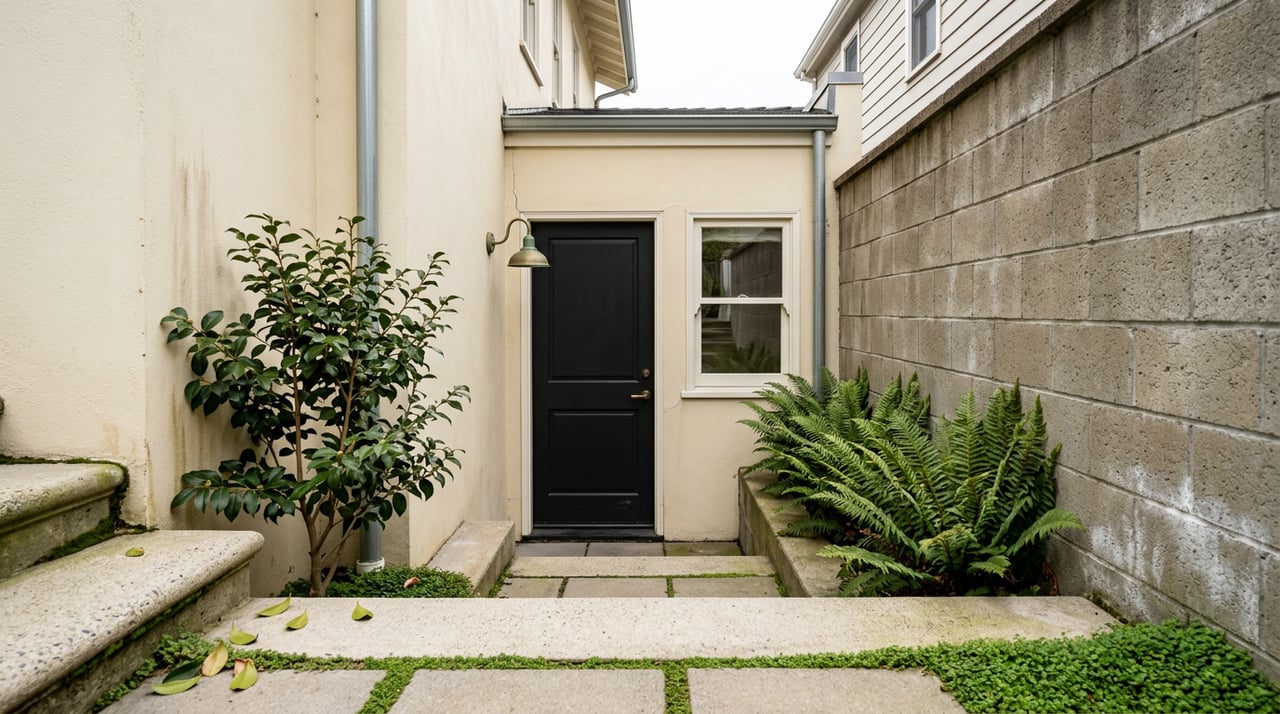
You're standing in the garden-level room of a house on one of the numbered avenues. There's a stove, a shower, a separate entrance off the side yard. The listing calls it a "bonus room." Your agent calls it something else under her breath. Before you fall in love with the extra square footage, or the extra rental income, there's a piece of paper that will tell you what San Francisco actually thinks this house is. It just won't tell you everything.
That paper is called a 3R report, and understanding its limits is the single most useful thing a Richmond District buyer or seller can do before signing anything.
What a 3R Report Actually Covers
A 3R, short for Report of Residential Building Record, is a document the Department of Building Inspection compiles from city records. San Francisco's Housing Code requires the owner, or the owner's agent, to obtain one before selling a residential building and deliver it to the buyer before the sale closes. The report tells you what DBI's records say the property is authorized to be: the number of legal dwelling units, the building's permit history, and its zoning classification.
Here's the part that catches people off guard. The report covers building permits only. It does not include plumbing or electrical permit history. It does not physically inspect the property. And it carries its own disclaimer stating that it makes no representation about legal compliance. If DBI's paperwork is wrong, or incomplete, the report being wrong in your favor does not protect you from later code enforcement. You can request the report online through the city, and it typically takes seven to ten business days to arrive, valid for one year from issuance.
That's a narrow document doing a wide job. A house can look, from the sidewalk, exactly like a two-unit building and still carry a 3R that lists one legal dwelling.
The gap between what a 3R report says a house is and what a house actually is happens to be exactly where Richmond District risk lives.
Why the Richmond Has So Many of These Rooms
This isn't random. It's baked into how the neighborhood was built.
By 1913, the Richmond's development pattern had settled into a consistent shape: the main house sat at the front of the lot, and roughly 40 percent of the remaining lot held a garden, a shed, or a garage, according to the Western Neighborhoods Project's history of the district. That rear stretch of the lot, deep basements included, is exactly the kind of space that gets quietly finished into a bedroom, a studio, or a rental unit over a century of ownership turnover, often without anyone pulling a permit.
The pattern kept evolving. San Francisco Heritage's survey of the Inner Richmond notes that by the mid-1980s, the neighborhood had become attractive to infill developers who demolished older houses and cottages in favor of larger flats and apartment buildings, a wave locals nicknamed "Richmond Specials." Every one of those decades of renovation, expansion, and informal conversion adds another layer between what the city's permit files show and what's physically standing on the lot today. A similar pattern has been documented one neighborhood over in the Sunset, where one widely cited estimate put roughly a third of homes as quietly using garage space as living area, mostly without permits. There's no reason to think the Richmond's numbers look dramatically different.
None of this makes an in-law unit a red flag on its own. It makes the paper trail worth checking before you write an offer, not after.
Where the Gap Becomes a Problem
The trouble shows up at three specific points in a transaction.
The first is financing. Lenders and title companies check for unpermitted work before they'll fund a loan, and discovering an unwarranted conversion mid-escrow can stall or kill financing outright, forcing a renegotiation or a walk. The second is insurance. A carrier that later learns a rental unit was built without permits can deny a claim tied to that space, which matters a great deal if the electrical work behind the drywall was never inspected. The third is your own future plans. If you want to pull a permit for a kitchen remodel five years from now, DBI can require you to bring the whole unwarranted space up to code first, at a cost that has nothing to do with the remodel you actually wanted.
San Francisco does offer a path to fix this. The city's Unit Legalization Program lets owners register an existing unpermitted unit, provided it meets a specific set of conditions: the unit has to have existed before January 1, 2013, only one unwarranted unit can be legalized per lot, and the program is off limits if the unit is tied to certain no-fault evictions filed after March 2014. Even once legalized, the unit can't be subdivided or sold separately from the main house. It's a real fix, but it's neither instant nor free, and it's not available to every property that has one of these rooms.
| What the 3R Report Tells You | What It Does Not Tell You |
|---|---|
| Building permit history on file with DBI | Plumbing or electrical permit history |
| The number of legal dwelling units DBI recognizes | Whether that number matches what's physically built |
| The property's zoning classification | Whether any unpermitted space is safe or code-compliant |
| A one-year window of validity from issuance | Anything about the seller's disclosure of known defects |
What This Means for Your Offer or Your List Price Right Now
Here's where the market timing sharpens the stakes. Central Richmond's single-family homes carried a median sale price of $2.62 million as of June 2026, with houses closing in a median of just 12 days. Outer Richmond ran even faster: a median sale price of $2.0 million over the three months ending May 2026, up 20.1 percent year over year, with homes selling in a median of 15 days, down from 25 days the year before.
A market moving that quickly doesn't leave much room for a buyer to order a 3R report, wait the standard turnaround, and still write a competitive offer within the seven to ten day window most Richmond listings are drawing bids in. That's the practical bind: the document that would settle the in-law unit question takes longer to produce than the house takes to sell.
Which means the leverage sits with whoever prepares first. A seller who orders the 3R report before listing, and gets ahead of any discrepancy between the file and the floor plan, can price the home accurately and defend that price when an offer comes in low over the in-law unit. A buyer who asks for the 3R report on day one, rather than after an accepted offer, buys time to actually read it before a contingency clock starts running.
Three Questions Before You Waive Anything
If a Richmond District house you're considering has a finished basement, a garden unit, or a room with its own entrance, ask these before you waive a contingency:
- Does the 3R report list this space as a legal dwelling unit, or is it silent on it entirely? Silence usually means the space was never permitted as living space in the first place.
- Has the seller pulled a current 3R, or is the one in the disclosure package more than a year old? A stale report may not reflect recent permit activity, and it may have expired.
- If the unit turns out to be unwarranted, does it qualify for the Unit Legalization Program, or does its age or eviction history rule that out? The answer changes what the space is actually worth to you.
Frequently Asked Questions
Is a 3R report legally required to sell a home in San Francisco? Under the city's Housing Code, the owner or the owner's agent is required to obtain a 3R report and deliver it to the buyer before a residential sale closes, with a narrow exception for newly constructed buildings sold within a year of final completion.
What if the in-law unit is already legal? Some Richmond District properties, particularly those built or converted more recently, do carry a 3R report that accounts for the extra unit correctly. In that case the report simply confirms what you're seeing, and the transaction proceeds like any other multi-unit sale.
Does legalizing a unit before selling raise the price? A permitted, code-compliant unit is generally easier for a lender and an appraiser to credit toward the home's value than an unwarranted one, since a legal unit's rental potential and square footage can be counted with confidence. Whether the cost of legalization pencils out before a sale is a math problem specific to each house, not a universal rule.
If you're weighing a Richmond District purchase with one of these rooms, or preparing to list a home that has one, it helps to have someone who reads these reports for a living look at yours before you commit to anything. Meagan Levitan offers a confidential home valuation that accounts for exactly this kind of detail, the ones that don't show up until someone actually goes looking.