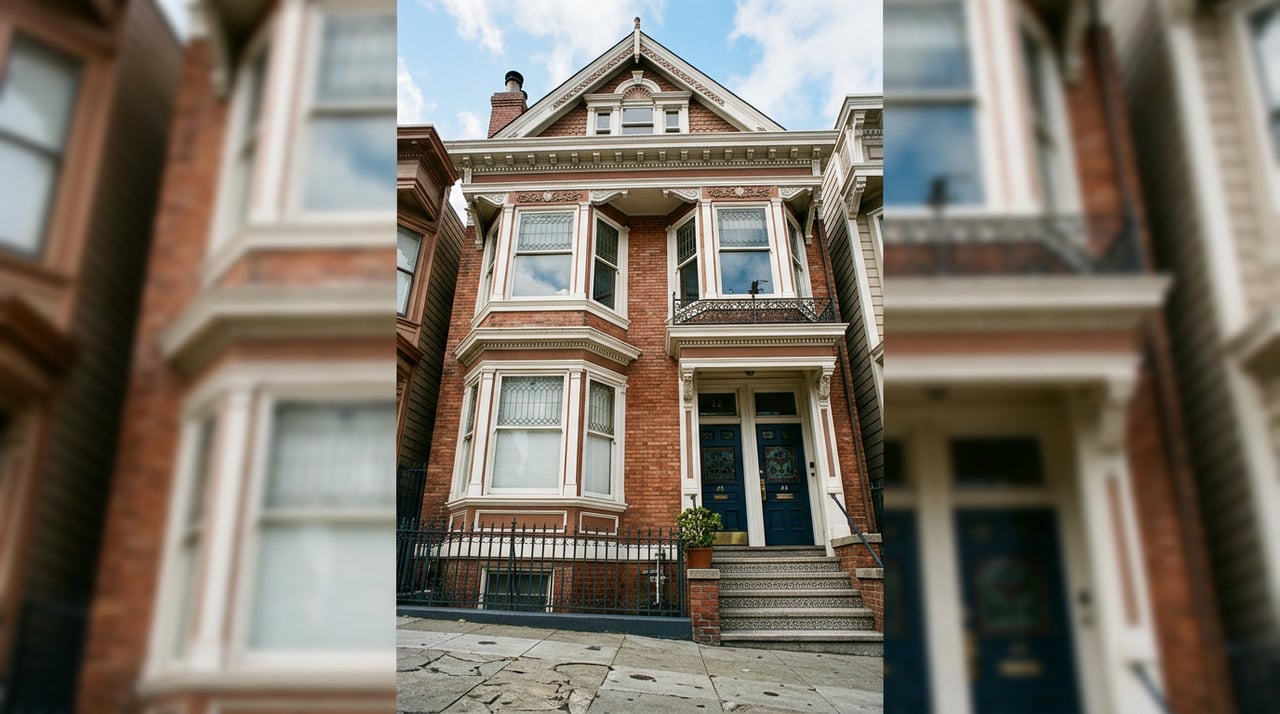
A buyer touring the Mission this fall will hit the same wall eventually. Two units, same block, same vintage Edwardian bones, and a price gap that doesn't match anything visible. Same light, same layout, same walk to BART. One is a condo. One is priced 10 to 30 percent below it, depending on the building, and it's labeled a TIC.
The instinct is to assume something's wrong with the cheaper unit. Bad inspection. Difficult HOA. A seller in a hurry. Sometimes that's true. More often, the explanation involves ownership structure and financing, including the City's condo-conversion lottery.
What a TIC actually buys you
The San Francisco Office of the Assessor-Recorder describes tenancy in common ownership as co-owners holding portions of a single parcel rather than separately deeded units. The city still treats the whole structure as one parcel for tax purposes, which is why TIC buildings get a single master tax bill that owners split rather than individual bills the way condo owners receive them.
None of that is unique to the Mission. What is specific to this neighborhood is how much of its housing stock still sits in that structure. The Mission's rowhouses and flats were built almost entirely before the cutoff date that determines rent control coverage in San Francisco. Buildings from that era were rarely built as condos to begin with, and Andy Sirkin's summary of San Francisco condominium conversion rules explains that converting a multi-unit rental building into individually titled condos has been tightly restricted in this city since 1981. TIC ownership became the workaround. Owners who couldn't get separate titles signed private agreements instead, and did it often enough, in old enough Victorians and Edwardians, that the Mission now shows up on market reports as one of the neighborhoods where TIC sales concentrate, alongside Noe Valley, the Marina, and Nob Hill.
The number that's actually explaining the gap
Mission condos sold at a median of $1.27 million over the three months ending in April 2026, up 10.8 percent year over year. That's the number a buyer compares a TIC listing against. It's also the wrong comparison to make without qualification, because a condo and a TIC in the same building are not interchangeable products. One has a deed. The other has a contract and a much smaller pool of lenders willing to touch it.
The price gap reported across the market this year runs anywhere from about 10 percent to as much as 30 percent below comparable condos, and the range itself is a clue. A spread that wide isn't describing consistent differences in finishes or square footage. It's describing how much financing friction the market is pricing in, building by building, based on how far each one sits from ever converting.
Why the gap won't close on its own
The conversion rules help explain why financing friction varies so widely. San Francisco's condominium conversion lottery, the mechanism that lets buildings apply to become condos, was suspended in 2013 under the 2013 ordinance.
Some buildings may qualify for a lottery bypass, while other TICs have different conversion paths. Even when the lottery did run, it only selected 55 to 70 winning buildings out of the citywide pool each year.
That's the mechanism worth sitting with: a buyer who assumes conversion is a matter of time and paperwork is betting on an uncertain outcome that depends on the building's eligibility and conversion history.
| Condo | TIC (3-6 unit building) | |
|---|---|---|
| Title | Individually deeded unit | Fractional interest in whole building |
| Property tax bill | Separate, per unit | One master bill, split by owners |
| Typical financing | Conventional 30-year mortgage | Fractional loan, smaller lender pool |
| Rate premium | Standard market rate | Often 0.5 to 1 percentage point higher |
| Path to full title | Already in place | May have an expedited path or await lottery |
What this means for financing, not just price
The rate difference matters more than the sale price does over the life of a loan. TIC buyers work with a narrow set of lenders who write fractional loans, and even in a year when fixed-rate TIC products expanded, buyers are typically looking at rates a half point to a full point above what a condo buyer qualifies for on the same building. Down payment requirements tend to run higher too, often in the 20 to 30 percent range, because the lender is underwriting a share of a shared asset rather than a clean individual title.
That financing premium helps explain the discount. A unit that looks 20 percent cheaper on the sale price can lose a meaningful chunk of that advantage once the loan terms are built in. It's not a reason to avoid TICs in the Mission. It's a reason to run the actual numbers on rate and down payment before treating the sale price as the full comparison.
What the other end of the market looks like
For a sense of where the ceiling sits once a building has cleared full condo status, look at 653 Dolores Street, a former Christian Science church across from Mission Dolores Park that developer Siamak Akhavan spent years converting into four condominiums. One of those units, 5,300 square feet with 30-foot ceilings and the original stained glass intact, hit the market in June 2026 asking $6.8 million. That's a fully titled condo in a landmark conversion, not a TIC waiting on a lottery, and the price reflects it. The seller of that unit had bought it in 2016 for $6.1 million and later leased it out for $20,000 a month before listing it for rent at $40,000. Whatever else that sale says about the top of the Mission market, it says title status is doing real work in that price, not just square footage or ceiling height.
Before you write an offer on a TIC
Ask the listing agent directly which conversion track, if any, the building can eventually pursue. Get a fractional loan pre-approval before you fall for a specific unit, since not every lender writes these loans and terms vary more than they do in the conventional mortgage market. None of that makes a TIC the wrong purchase. It makes the purchase a different one than the condo down the block, priced by a market that reflects the difference between those ownership structures.
A few common questions
Does a TIC mean I lose access to conventional mortgage rates permanently? Only until the building converts, if it converts. Buildings that clear condo status open up to conventional 30-year financing and the wider buyer pool that comes with it, which is part of why conversion tends to raise resale value beyond the price of the paperwork itself.
Are all Mission TICs stuck waiting on the lottery? No. Conversion options vary by building.
Whether you're comparing a TIC to a condo in the same building or trying to figure out what a Mission price per square foot actually buys once financing is factored in, the numbers rarely tell the whole story on their own. If you want a clear read on a specific building or listing, Meagan Levitan offers a Request a Confidential Home Valuation for exactly these situations, where the structure behind the price matters as much as the price itself.
This article is general information, not legal, tax or financial advice. Consult a qualified professional about your situation.