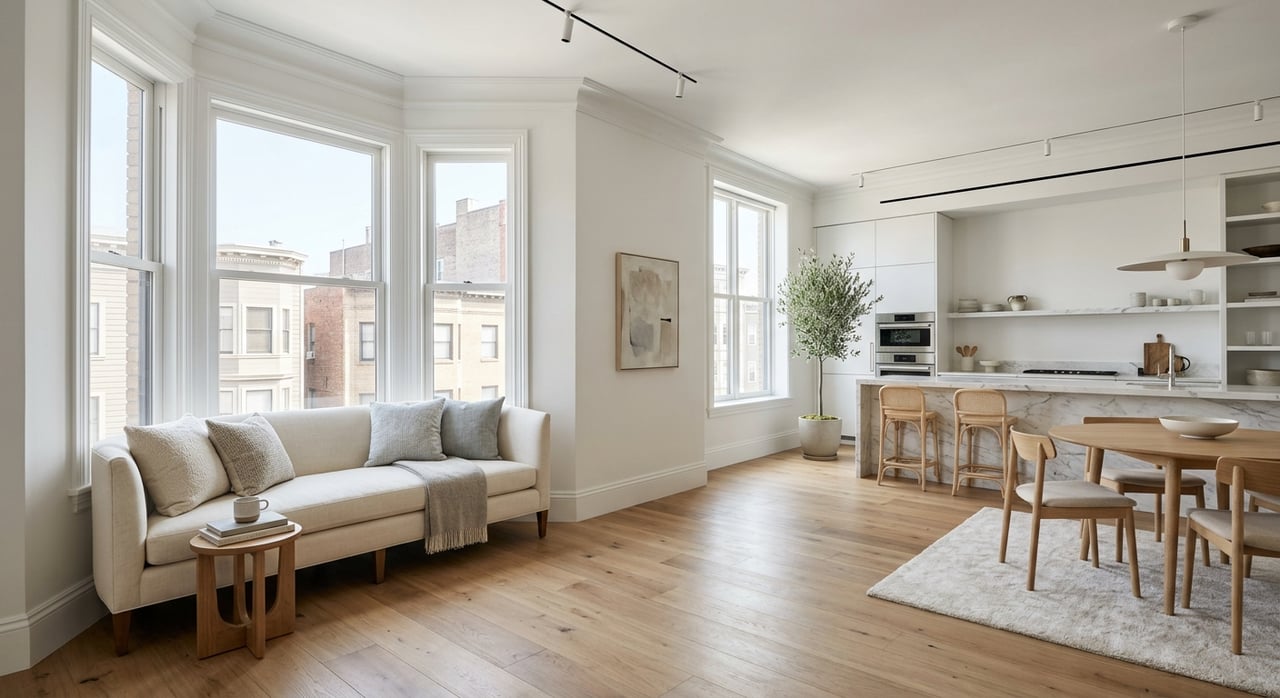
Trying to choose between Russian Hill and Nob Hill for a condo purchase? These two classic San Francisco neighborhoods sit close together, but they can feel surprisingly different once you look at building types, layout options, daily convenience, and pricing. If you want a clearer way to compare them before you tour, this guide breaks down the differences that matter most. Let’s dive in.
Condo stock feels different
At a glance, both neighborhoods offer older San Francisco housing stock, but the condo experience is not the same. The median structure year is 1957 in Russian Hill and 1955 in Nob Hill, so age alone does not explain the difference.
The bigger contrast is building scale. In Russian Hill, the housing mix is spread across 2 to 4 unit buildings, 5 to 9 unit buildings, 10 to 19 unit buildings, and 20+ unit buildings in fairly balanced shares. That tends to create a more mixed condo environment, with boutique buildings, mid-size properties, and some larger multi-unit buildings all in the same neighborhood.
Nob Hill leans much more heavily toward larger structures. Nearly half of its housing stock is in 20+ unit buildings, which often translates into a more formal condo setting with larger common areas, elevators, and a broader selection of compact layouts.
Unit sizes and floor plans
If floor plan matters as much as location, Russian Hill and Nob Hill start to separate quickly.
Russian Hill has a stronger share of one-bedroom and two-bedroom homes, at 39% and 34% respectively, with another 14% in the 3 to 4 bedroom category. That mix suggests more variety if you want extra space, a larger flat-style layout, or a condo that feels less compact.
Nob Hill has a smaller-unit profile overall. Its mix includes 32% no-bedroom units, 41% one-bedroom units, 20% two-bedroom units, and 7% three- to four-bedroom units. In practical terms, that often means more studios and one-bedrooms, especially in larger buildings.
Russian Hill often trades on views
If your condo search starts with outlooks, Russian Hill may stand out faster. Current listings in the neighborhood repeatedly highlight views of the Golden Gate Bridge, Bay, skyline, city lights, and landmarks like the Palace of Fine Arts.
That view-driven appeal shows up across price points. Active examples range from roughly $649,000 for a one-bedroom to about $6.5 million for a larger design-forward residence. The exact number still depends on the building, floor, finish level, and whether the view is broad or partial.
This does not mean every Russian Hill condo is view-centric. It does mean view premiums are a recurring part of the neighborhood’s condo story.
Nob Hill often trades on centrality
Nob Hill tends to feel more urban and more centered on access. Current listings include one-bedroom condos around $575,000 to $775,000 and two-bedroom condos around $1.75 million to $2.8 million, with some higher-end outliers above that.
The neighborhood’s location helps explain that pattern. Nob Hill sits close to North Beach, Union Square, and the Polk Street corridor, so buyers often choose it for a more immediate connection to restaurants, transit, and downtown-oriented routines.
A useful way to think about the tradeoff is simple: Russian Hill often rewards views and building intimacy, while Nob Hill often rewards centrality and a wider pool of compact condo inventory.
Walkability is excellent in both
You do not need to choose between walkable and not walkable here. Both neighborhoods score extremely high by current consumer-market measures, with Nob Hill at Walk Score 99 and Russian Hill at 98.
So the better question is not whether you can live well without a car. The better question is how you want your daily routine to feel.
Commute patterns are not the same
Even though both neighborhoods are highly walkable, their day-to-day movement patterns differ.
Nob Hill appears more pedestrian-centered in practice. SF Planning data shows 37% of residents walk to work, and 59% of households have no vehicle. That points to a daily rhythm that is especially oriented around walking and transit.
Russian Hill is still transit-rich and central, but the commute mix is more balanced. In SF Planning data, 18% walk to work, 34% use transit, 32% drive, and 39% of households have no vehicle. That can read as slightly more residential in feel, even while remaining very connected.
Transit access in both neighborhoods
Transit is strong in each neighborhood, but Nob Hill has a particularly dense network. SFMTA lists the California Cable Car, Powell/Hyde Cable Car, and Powell/Mason Cable Car, along with routes including 1 California, 2 Sutter, 3 Jackson, 19 Polk, 30 Stockton, 38 Geary, and 47 Van Ness.
Russian Hill also benefits from cable car access, especially along the Powell-Hyde line. For many buyers, the transit difference is less about whether service exists and more about how quickly your preferred routes connect you to work, dining, or errands.
If you want easier access to Polk Street, North Beach, Union Square, and downtown-facing transit, Nob Hill generally has the edge. If you want a setting that feels a bit more residential while staying central, Russian Hill often fits better.
Price differences are real but modest
As of March 2026, Redfin reported a median sale price of $1.425 million in Russian Hill and $1.35 million in Nob Hill across all home types. That is a $75,000 difference, or about 5.6%, in favor of Russian Hill.
This is not condo-only pricing, so it is best used as a broad neighborhood snapshot rather than a direct condo comp. Still, it suggests Russian Hill currently carries a modest premium.
Listing patterns help explain why. Nob Hill has more clearly entry-level one-bedroom inventory in the mid-$500,000s to mid-$700,000s, while Russian Hill listings move more quickly into the $1 million-plus range when views, larger layouts, or prime addresses are involved.
HOA review matters in both areas
In neighborhoods with older multi-unit buildings, HOA review is not a side note. It is a core part of the buying decision.
California condo buyers should expect to review association budget and reserve information, including income and expense statements for operating and reserve accounts under the Davis-Stirling framework. This matters in both neighborhoods, but it may come into sharper focus in Nob Hill because of its heavier concentration of 20+ unit buildings.
Larger buildings can mean more formal governance and greater sensitivity to reserve levels, elevator maintenance, insurance, and common-area upkeep. In Russian Hill, smaller buildings may feel simpler on the surface, but buyers still need to understand reserves, deferred maintenance, and shared expense exposure.
Building details can matter more than the hill
Once you narrow your search, the neighborhood name only tells part of the story. In both Russian Hill and Nob Hill, building-level details often decide whether a condo is a smart fit.
Pay close attention to:
- HOA reserves and budget strength
- Elevator condition, if applicable
- Parking availability
- Floor plan efficiency
- Renovation level
- Common-area condition
- Whether a view is protected, partial, or easily impacted
Two condos with similar list prices can feel very different once you compare these factors side by side.
Which neighborhood may fit you best?
If you are deciding between the two, a simple framework can help.
Choose Russian Hill if you want
- Stronger odds of iconic bay or bridge views
- More boutique and mid-size building options
- More variety in one-bedroom, two-bedroom, and larger layouts
- A condo setting that often feels a bit more residential
Choose Nob Hill if you want
- A more central, urban daily rhythm
- Easier access to Polk Street, North Beach, Union Square, and downtown routes
- More compact condo inventory, including studios and one-bedrooms
- A neighborhood that reads more walk-heavy and car-light in daily life
Neither choice is universally better. The right fit depends on whether you value views and building intimacy more, or centrality and immediate access more.
If you are comparing specific condos in either neighborhood, a calm building-by-building review usually tells you more than broad neighborhood labels alone. For tailored guidance on Russian Hill and Nob Hill condo opportunities, connect with Meagan Levitan.
FAQs
What is the main condo difference between Russian Hill and Nob Hill?
- Russian Hill has a more mixed building profile with more boutique and mid-size properties, while Nob Hill has a heavier concentration of larger 20+ unit buildings and more compact condo inventory.
Are Russian Hill condos more expensive than Nob Hill condos?
- Broad neighborhood pricing in March 2026 showed Russian Hill with a median sale price of $1.425 million versus $1.35 million in Nob Hill, suggesting a modest premium, though condo values still vary widely by building, layout, and views.
Does Russian Hill have better views than Nob Hill for condo buyers?
- Current listing patterns suggest Russian Hill is more consistently marketed around Bay, bridge, skyline, and city-light views, so view premiums appear to play a larger role there.
Is Nob Hill more walkable than Russian Hill for condo owners?
- Both are extremely walkable, with Walk Scores of 99 for Nob Hill and 98 for Russian Hill, but Nob Hill shows a more walk-heavy and car-light daily pattern in SF Planning commute data.
What should condo buyers review in a Russian Hill or Nob Hill HOA?
- Buyers should review HOA budget and reserve information, operating and reserve account statements, and building-specific items such as elevators, insurance, maintenance needs, and common-area condition.
Which San Francisco neighborhood is better for a one-bedroom condo, Russian Hill or Nob Hill?
- Nob Hill generally offers a broader supply of compact units, including studios and one-bedrooms, while Russian Hill may offer more layout variety and stronger view-driven options depending on the building.