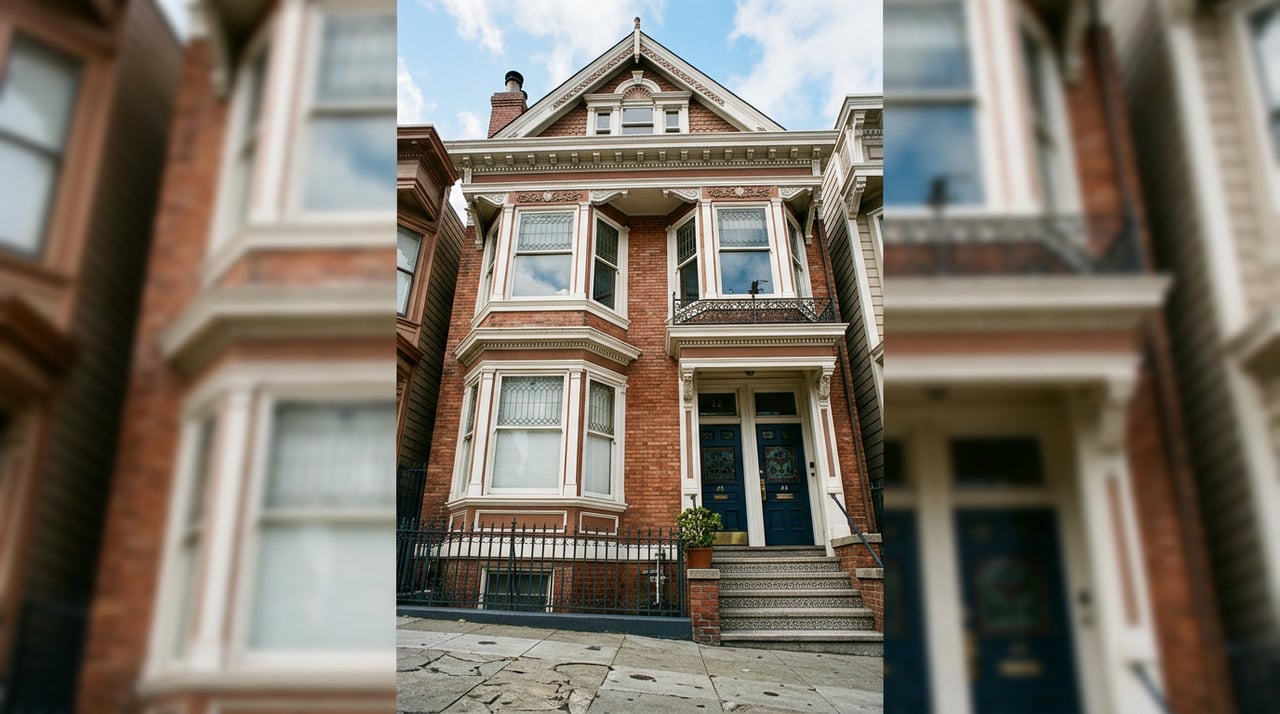
Walk Valencia between 15th and 23rd right now and you will notice something that used to be impossible: the street feels settled. The parked cars sit where they have always sat, the bikes run in a slim protected lane along the curb, and the parklets outside Venga Empanadas and Sextant Coffee Roasters have not moved in over a year. That stillness is the story. For three years, this stretch of the Mission ran an open experiment on itself, tore up the results, and tried again. The current version has been in the ground since May 2025, and the point-of-sale data now backs up what merchants have been saying out loud all summer: the corridor did not just survive the redesign, it is doing measurably better business because of it.
That is the part most visitors to this block miss. They see two new restaurants moving in and assume it is just another cycle of Mission churn. It is actually the opposite. Two operators with real capital at stake, one relocating a two-Michelin-starred kitchen and one opening a six-thousand-square-foot nightlife concept, are betting on a version of Valencia Street that finally stopped changing its mind.
A short history of a long argument
The trouble started with good intentions. In summer 2023, the San Francisco Municipal Transportation Agency piloted a two-way center-running bike lane down the middle of Valencia, an award-winning design on paper that put cyclists between the two directions of car traffic. Businesses hated it almost immediately. Deliveries got harder, parking disappeared, and drivers found the layout confusing enough to double-park directly in the bike lane. Eiad Eltawil, who owned the family restaurant Yasmin on the strip, went on a hunger strike over it and sued the city. Yasmin closed anyway.
By November 2024, the SFMTA board had heard enough and voted unanimously to scrap the center lane for a side-running, curbside-protected design between 15th and 23rd streets, closer to what already existed on Howard, Folsom, and 17th. Crews broke ground that February, and by early May 2025 the new lanes were painted, striped, and open. The timing was almost theatrical: the city held its ribbon-cutting on a Thursday afternoon and the very same evening, Valencia hosted its first-ever night market.
What the receipts actually say
Here is the number that should reframe how you think about this stretch. According to Square point-of-sale data reported by Gazetteer SF, Valencia businesses saw transactions fall roughly 1 percent from August 2023 to July 2024, the year the center lane fight was at its worst, compared to 10 percent growth over the two years before that. Then, in the twelve months after the curbside redesign went in, from August 2024 to August 2025, transactions on the corridor rose 11 percent.
For context on what that kind of infrastructure shift can do, protected side-running bike lanes on 9th Avenue in Manhattan produced a 49 percent jump in retail sales, against just 3 percent elsewhere in the borough over the same period, according to the same Gazetteer reporting. Valencia's numbers are more modest, but the direction matches, and the timing lines up too closely with the redesign to be a coincidence.
Pablo Romano, who has owned Venga Empanadas on Valencia for fifteen years, put it plainly to Gazetteer SF: "It's a lot better than the older one, which was absurd." Other merchants describe the past year in terms closer to relief than celebration, the sense of a street that finally feels like itself again after a long stretch of construction cones and confusion.
The four blocks nobody fixed
Before this sounds too tidy, there is a real gap worth knowing about if you bike this corridor daily. The protected lane only runs from 15th to 23rd. South of 23rd down to Cesar Chavez, the route reverts to an unprotected Class II painted lane, and as of an April 2026 report from Streetsblog San Francisco, the city has no announced timeline to extend the protection that far. Transit advocates quoted by Streetsblog, including Radulovich and White, have flagged this as the one piece of unfinished business on an otherwise resolved corridor, a stretch where cyclists still have to mix directly with car traffic right at the edge of the improved zone. If you live south of 23rd, your daily ride still looks like 2023.
Who is moving in now
Capital tends to be a more honest signal than sentiment, and two moves this year suggest operators believe the calm on Valencia will hold.
Sons & Daughters, the two-Michelin-starred restaurant currently on Nob Hill, is relocating to a larger Mission District space at 18th and Florida streets, with an open kitchen, a dedicated bar, and a late-2026 target for reopening. A fine-dining kitchen with that kind of reputation does not sign a Mission lease on a hunch. It signs one because the traffic data, the foot patterns, and the neighborhood's own read on itself point the same direction.
A few blocks over on Mission Street, the team behind Bar Part Time, the natural wine bar known for its late-night dance parties, is opening a new concept called Downtime in the former Bissap Baobab space at 2243 Mission Street. Dan Small, Jeremy Castillo, and Justin Dolezal are behind the roughly six-thousand-square-foot buildout, which blends food, cocktails, and natural wine with a dedicated dance floor and upgraded sound system. It is slated to debut in late fall 2026. This is not a pop-up testing the waters. It is a multi-year lease on nightlife infrastructure, in a neighborhood that spent the past three years being genuinely unpredictable to operate in.
How to actually spend a Thursday night here
If you want to see the corridor at its current best, the second Thursday of the month is the move. Valencia LIVE!, the free, all-ages street party run by the Valencia Corridor Merchants Association with Into the Streets and the Civic Joy Fund, has been rotating its footprint block by block through the 2026 season:
- May 14 and June 11, between 16th and 19th Streets
- July 9 and August 13, between 17th and 20th Streets
- September 10 and October 8, between 18th and 21st Streets
Each installment runs 5 to 10 p.m. with live music curated by Carnaval SF, plus a quieter lead-in from 5 to 6 p.m. called The Drawing Table, a community sketching session hosted by Sal Steiner for anyone who wants to make something with their hands before the music starts. Acapulco Kitchen usually handles the after-party smash burgers. The rotation means the party has now touched most of the rebuilt corridor at least once this season, which is either a coincidence or the merchants association's quiet way of making sure every block gets its turn in the spotlight.
Earlier in the summer, on July 19, the city closed a longer stretch of Valencia, from Duboce Avenue down to 26th Street, for Sunday Streets, the joint SFMTA and Livable City open-streets event that hands the whole roadway over to pedestrians and cyclists from 11 a.m. to 4 p.m. Cross streets at 14th, 16th, 18th, and 24th stayed open for traffic, so the closure read more like a long block party than a full shutdown.
What did not change
Through all of it, the identity of the street held. The Valencia Corridor Merchants Association still describes its stretch, running from Cesar Chavez to Market, as the longest run of independent businesses in the country, and walking it still means passing Everlane and Lemon Twist and State of Flux for retail, Bernal Cutlery for kitchen tools, Dog Eared Books and Paxton Gate for the kind of browsing that has no real online equivalent. The San Francisco Gay Men's Chorus still calls Valencia home. None of that required a bike lane redesign to survive, and none of it was ever really at risk. What the redesign changed was whether new capital wanted to bet on the block next to those institutions, and this year, for the first time in a while, the answer is yes.
If you are watching this corridor the way we are, curious about what a settled Valencia Street means for property values on the blocks just off it, Meagan Levitan has been tracking Mission District market movement for nearly two decades and is always glad to talk through what a specific address is worth in the current market.